Water Leap Sprint Showdown
Reviews
Water Leap Sprint Showdown delivers a focused multiplayer experience built on a single clear mechanic: leaping between platforms without falling. The real-time competition adds pressure and replay value, while the gradual difficulty curve makes it accessible to newcomers. The blocky visual style keeps platform edges and gaps easy to read. Its main limitation is the reliance on a single core action, which may feel repetitive for players seeking deeper mechanics. Best suited for fans of quick, competitive arcade races.
Description
Racing Across Floating Platforms
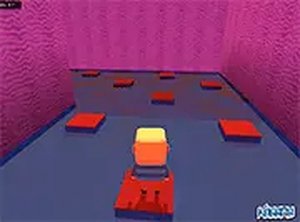
Water Leap Sprint Showdown turns platform hopping into a race. The goal is simple: move from one platform to the next as quickly as possible without falling into the water below. Jumping is the primary action, but speed alone will not win races. Each course strings together platforms at different distances, so players must read the gap ahead and adjust their jump timing accordingly. Some platforms sit close enough for a quick hop; others demand a committed leap. Maintaining momentum matters, yet a single mistimed jump ends the run.
Real-Time Competition and Pressure
Unlike solo platformers, this game places players against others on the same course simultaneously. Seeing opponents' progress adds immediate pressure and motivation to refine technique. Every race plays out differently depending on who is competing, which encourages repeated attempts. Positioning and consistency carry as much weight as raw speed, turning each course into a tactical contest rather than a simple obstacle run.
Visual Clarity and Feedback
The blocky art style uses bright colors and clear visual cues to help players identify platform edges and gaps at a glance. The water below is rendered distinctly, so a fall is immediately obvious. This clean, uncluttered presentation supports the fast pace by letting players focus on movement and timing without distraction.
Low Barrier to Entry
The game runs entirely in a web browser with no installation or account setup. It works on any computer with an internet connection, and controls are simple, typically keyboard keys or mouse clicks. A full screen mode is available. Because the game is lightweight, it performs smoothly even on older hardware, letting players start racing within seconds.
Progression Through Course Design
Courses are arranged in a sequence that gradually increases in difficulty. Early stages use wide platforms with generous spacing, giving newcomers room to build confidence. Later courses shrink the platforms and widen the gaps, demanding more precise timing and faster reactions. This steady ramp keeps the challenge engaging without becoming frustrating too quickly. Advancement is tied directly to the courses themselves, so progress feels natural as skills improve.






Editorial Notes