Samurai Showdown 3: Energy Blades
Reviews
Samurai Showdown 3: Energy Blades stands out among retro fighters for rewarding precision over speed. The Rage Gauge gives losing players a tactical comeback tool, while the two-round structure encourages adaptation. Pixel art and an atmospheric soundtrack reinforce the feudal setting. The roster mixes returning warriors with new characters, offering variety without overwhelming newcomers. This is a solid choice for players who enjoy measured, one-on-one blade combat and family-friendly arcade action.
Description
Dueling with Blades and Timing
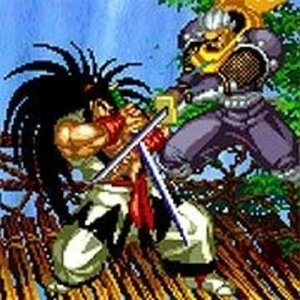
Samurai Showdown 3: Energy Blades is a one-on-one fighting game set in a feudal Japanese world. Each match pits two warriors against each other, and the winner is whoever depletes the opponent's health bar over two rounds. What separates this fighter from button-mashing brawlers is its emphasis on deliberate, measured combat. Rapid inputs rarely win exchanges; reading your opponent and striking at the right moment does.
Rage Gauge and Risk Management
Taking damage fills a Rage Gauge, which temporarily strengthens your attacks. This creates a risk-reward layer: a player who is behind can turn the match around by absorbing hits and then unleashing powered-up strikes. Managing when to trigger that boost—rather than simply reacting—is a core tactical decision. The gauge adds tension to every exchange, because a losing position is not necessarily a lost round.
Controls and Combat Options
Movement covers forward, backward, and jumping. Attacks are split into light, medium, and heavy strikes, and each character has unique special moves triggered by specific button combinations. Blocking and dodging are essential defensive tools. The practical rhythm is to avoid incoming hits, wait for a vulnerable frame, then counterattack. Training mode lets players rehearse combos and counters without match pressure, which is useful because the roster includes both returning warriors and new fighters with distinct styles.
Presentation and Roster
Pixel art graphics and an atmospheric soundtrack establish the retro arcade feel. The visual style supports the feudal setting rather than distracting from the fight. With multiple characters, each with their own abilities and fighting styles, players can experiment to find a warrior that matches their preferred balance of offense and defense. The game aims for a family-friendly arcade experience, making it accessible to fans of classic fighting games who value patience and precision over speed.




Editorial Notes