Stickman Physics Action Arcade
Reviews
Stickman Physics Action Arcade focuses on the simple pleasure of launching projectiles at stickman enemies and watching physics do the rest. The ragdoll reactions add unpredictability, while multiple projectile types and changing level layouts encourage experimentation. Its easy controls make it accessible, though the lack of specified multiplayer or deep progression may limit long-term appeal for some. Best for players who enjoy casual destruction and strategic aiming without complex rules.
Description
Projectile Aiming and Ragdoll Reactions
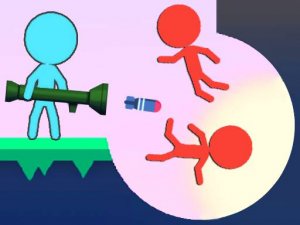
At its core, Stickman Physics Action Arcade asks you to line up shots with a selection of projectiles and fire them at stickman opponents and the structures they occupy. The appeal lies in how those targets react: ragdoll physics send enemies tumbling and flying in exaggerated, often comical ways when struck. That unpredictability is the point, not a side effect. A single well-placed shot can trigger a chain reaction that collapses a base or knocks several enemies out of position, so each turn becomes a small puzzle of angle, timing, and projectile choice.
Level Structure and Obstacles
Each level presents a fresh arrangement of enemies, obstacles, and targets. You must eliminate all opponents and destroy their structures to move on. Later stages introduce new obstacle placements and enemy configurations, which forces you to adjust your approach rather than repeat a single winning shot. Because the layouts change, the game rewards observation before firing—scanning for weak points, unstable structures, or clusters of enemies that can be toppled together.
Controls and Accessibility
The control scheme is deliberately simple, letting you concentrate on aiming and timing rather than complex inputs. That simplicity makes the game approachable for players of any skill level, but it does not make it mindless. Precision often matters more than speed, and the physics system means that a shot that looks close can still produce a satisfying result through a ricochet or a collapsing wall. The game is built for short, repeatable sessions where the fun comes from experimenting with different projectiles and watching the consequences play out.
Projectile Variety and Progression
Multiple projectile types keep the action varied. Some may be better suited to direct hits on enemies, while others might be more effective at breaking apart structures or triggering environmental chain reactions. The game may include a progression system where completing levels unlocks new stages or projectiles, giving you a reason to revisit earlier challenges with new tools. That structure supports a lighthearted, low-pressure experience focused on creative destruction rather than realistic violence.




Editorial Notes