Stick To It! Puzzle Adventure
Reviews
Stick To It! Puzzle Adventure stands out through its notebook-paper presentation, where every platform and hazard looks pencil-drawn. The core loop is simple: read the page, plan a route, and jump with care. Difficulty rises steadily, so early levels teach timing while later ones combine moving platforms and scribbles into longer sequences. The lack of violent content and the straightforward controls make it a comfortable pick for families. Its main limitation is that the appeal rests on puzzle-solving rather than action, which may not suit players seeking fast-paced platforming.
Description
Notebook Paper World
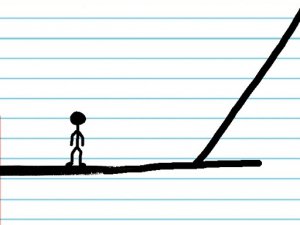
Every level in Stick To It! Puzzle Adventure is drawn on notebook paper, from the stick-figure hero to the scribbled obstacles and moving platforms. The hand-drawn look gives each page the feel of a sketchbook coming to life. The art style stays simple and charming, which keeps the focus on reading the layout and planning a route rather than parsing visual clutter.
Precision Over Speed
Players move left or right and jump using keyboard or touch controls. Tapping or clicking interacts with objects in the scene. The goal is to reach the end of each level without falling or hitting a hazard. Moving platforms and tricky scribbles demand careful timing, so the game rewards observation before action. Rushing usually leads to a restart, while a measured approach reveals the safest path.
Gradual Difficulty Curve
Puzzles start easy and become more challenging as pages progress. Early levels introduce basic jumps and simple gaps, then later stages combine moving platforms and scribbled hazards that require planning a route step by step. The difficulty rises without becoming frustrating, so players can build timing and observation skills at their own pace.
A Friendly Fit for All Ages
The game contains no violent or inappropriate content, making it suitable for families and younger players. Simple controls mean anyone can start playing right away, and the notebook aesthetic keeps the tone light. Short play sessions work well, though the level structure also supports longer stretches. Players who enjoy calm problem-solving and precise platforming are the most likely audience.




Editorial Notes