Stickman Bridge Construction Puzzle
Reviews
Stickman Bridge Construction Puzzle strips the bridge-building idea down to a single press-and-release decision. That narrow focus is its strength: there is nothing to manage except your judgment of distance and your timing. Players who enjoy reflex-based puzzles with endless levels will find a clean challenge here. The limitation is equally clear—anyone wanting varied mechanics or deep progression may find the loop repetitive. It works best as a quick, repeatable test of precision.
Description
The Core Timing Mechanic
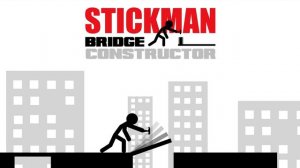
Stickman Bridge Construction Puzzle asks one thing of you: press to start building a bridge, then release at the exact moment the bridge reaches the far edge of the gap. A bridge that is too long or too short sends your stickman falling. There is no aiming, no inventory, and no complex controls—just your sense of when to let go.
What Each Gap Demands
Every level presents a new gap, and the distance changes. Before you press, you have to read the gap size and translate that into a release timing. This is where the puzzle element lives: the game is not testing your reaction speed alone but your ability to judge distance and convert it into a physical action. The visual simplicity keeps the focus on that judgment.
Controls and Accessibility
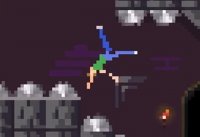
A single tap or touch starts the bridge, and lifting your finger completes it. That is the entire control scheme. Because the input is so minimal, the game is easy to pick up, but the precision required means mastery takes practice. The stickman art style and minimalist presentation keep attention on the gap and the bridge rather than on distracting detail.
Progression and Replay
The game offers endless levels, so the challenge continues as long as you keep playing. A scoring system or progress tracking may be present to encourage improvement, though the core loop remains the same: judge, release, and adjust. Quick sessions work well because each attempt is short, but the difficulty curve rewards players who stay consistent and learn from each miss.





Editorial Notes