Precision Track Pilot
Reviews
Precision Track Pilot stands out for making vehicle physics the core challenge rather than a background detail. Tracks built around ramps, tight gaps, and narrow pathways demand experimentation and repeated attempts, which suits players who enjoy mastering handling over chasing top speeds. The clean 3D presentation keeps obstacles readable, and the family-friendly tag suggests broad appeal. The main limitation is the lack of detail about vehicle count, multiplayer, or progression depth in the available information.
Description
Physics-Driven Driving
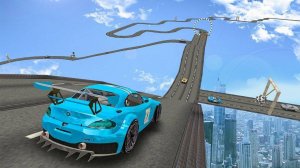
Every input in Precision Track Pilot carries weight. Acceleration, braking, and steering all influence the car's momentum and balance, so the vehicle behaves differently depending on speed and angle. Maintaining control through steep ramps, tight corners, and narrow pathways requires reading the car's behavior rather than reacting on instinct alone. The game rewards careful throttle management and precise steering instead of simply holding down the accelerator.
Track Design and Problem Solving
Courses are built around layouts that look nearly impossible at first glance. A sequence of ramps might demand a specific approach angle, while another section forces you to slow down to squeeze through a tight gap. These obstacles encourage experimentation: learning the optimal path usually comes through trial and error. Each new track introduces challenges that build on skills learned earlier, keeping the experience varied.
Vehicle Choice and Handling
Multiple vehicles are available, each with distinct handling characteristics. Some prioritize acceleration, while others lean toward grip or stability. That variety lets you find a car that suits your driving style, and learning how each vehicle responds to the same track can open up new strategies and faster times.
Visual Clarity and Progression
The 3D visuals focus on clarity, making obstacles and track boundaries easy to spot so you can react quickly. The clean look keeps attention on driving. Beginners start with simpler tracks to learn the basics, and complexity increases as you advance. Repeated attempts provide feedback, helping you sharpen reflexes and deepen your understanding of the car's handling over time.









Editorial Notes