Feline Portrait Dress-Up
Reviews
Feline Portrait Dress-Up delivers exactly what its name suggests: pick a cat, drag on accessories, and snap a photo for the album. The strengths are its simplicity and its lack of timers or scores, which makes it genuinely relaxing for young children and adults who want a light creative outlet. The main limitation is scope—there is no progression system, no challenge, and no multiplayer, so players seeking goals or competition will find little to hold their attention. It is a short-session activity, not a deep game.
Description
Choosing Your Cat
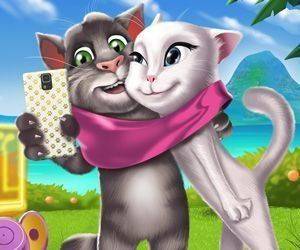
Feline Portrait Dress-Up begins with a small selection of cats, each drawn with distinct fur patterns and facial expressions. That initial choice shapes the rest of the session because every accessory sits differently on a striped tabby than on a solid-colored cat. The variety is modest but meaningful: it gives each styling attempt a different starting point without overwhelming the player with options.
Styling with Drag-and-Drop
A wardrobe of hats, glasses, and scarves appears on screen, and players drag items directly onto the cat to position them. There are no wrong combinations—the game encourages mixing and matching rather than steering toward a correct look. The interface is deliberately simple, with large targets and clear item icons, so young children can participate without adult help. Because placement is manual, the same scarf can sit high on the neck or drape loosely, giving each portrait a slightly different feel.
Taking and Keeping Photos
Once the cat is styled, a camera button captures the look. The image is saved to an in-game album, which players can revisit later. This turns each session into a small collection rather than a one-off activity, and it gives the dress-up process a natural endpoint. The album also serves as a record of experimentation, showing how different accessory combinations change a cat's appearance.
Relaxed, Open-Ended Play
Bright, cheerful graphics and pleasant sounds set a calm tone. There are no timers, scores, or penalties, so players can take as long as they like on a single cat or move quickly between ideas. That design makes the game suitable for stress-free play, appealing to children and to adults who want a light creative activity without pressure. The absence of failure states means the only goal is the one the player sets.







Editorial Notes