Blocky City Driving Adventure
Reviews
Blocky City Driving Adventure delivers exactly what its name suggests: arcade driving through a city made of blocks. The two-player local mode is the standout feature, letting friends race on one computer without extra hardware. Free drive mode supports low-pressure exploration. The simple controls and family-friendly presentation suit younger players, while boost timing adds a layer of skill. The game does not offer a story or deep customization, so players seeking progression may find it limited. It works best as a light, social racing game.
Description
A City Built from Cubes
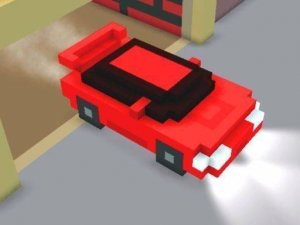
Every element in Blocky City Driving Adventure—cars, buildings, and streets—is constructed from colorful blocks. This visual consistency gives the environment a warm, toy-like quality that suits the family-friendly tag. The blocky style also makes the city easy to read at speed: corners, straightaways, and landmarks are distinct without realistic clutter. [IMG_1]
Driving with Purpose or Without
The game offers two approaches to its cube city. Free drive mode removes all objectives, letting players explore at their own pace and learn the layout. Timed races add a clock or a second player as the opponent. In both cases, the core action is the same: steer a cubic car, manage speed, and use a dedicated boost button for bursts of acceleration. The boost is the main tactical element—using it on straights rather than corners preserves momentum.
Local Competition and Controls
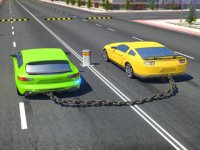
Two-player mode runs on a single computer, with each player assigned a separate set of keyboard keys for steering and boosting. This local setup makes it easy for friends or family to race head-to-head without additional hardware. Controls are intentionally simple: a few keys cover steering, acceleration, and boost. That accessibility means beginners can join quickly, while the boost timing and racing lines give experienced players something to refine. [IMG_2]
Who It Suits
Blocky City Driving Adventure targets players who want lighthearted driving without complex menus or story. The lack of narrative and the straightforward controls make it appropriate for children, while the timed races and two-player competition add enough challenge for adults. It is not a simulation; handling is arcade-style and forgiving, which keeps the focus on enjoyment rather than precision.




Editorial Notes