Baldi's Puzzle School Escape
Reviews
Baldi's Puzzle School Escape works best as a memory and route-planning challenge wrapped in 1990s educational-game nostalgia. Collecting seven notebooks while answering math problems creates a clear risk-reward loop, and Baldi's pursuit turns small mistakes into immediate pressure. Limited items like keys, soda, and door blocks force careful decisions. The game is not for players seeking combat or complex storytelling, but it offers a distinctive challenge for fans of unconventional puzzle adventures.
Description
The Notebook Hunt
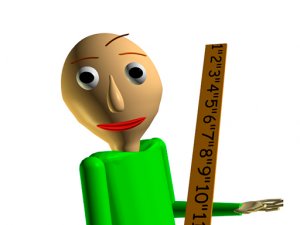
Baldi's Puzzle School Escape casts players as a student searching a retro-style school for seven hidden notebooks. Each notebook is a required objective, so the game is built around route planning rather than combat. The school layout stays consistent between attempts, which rewards players who memorize hallways, classroom positions, and shortcuts. Because the exit only opens after all seven notebooks are collected, every decision about which wing to search first has consequences for how much time is spent backtracking.
Math Problems and Baldi's Pursuit
Answering math problems correctly keeps Baldi calm and avoids drawing his attention. A wrong answer triggers pursuit, turning a quiet exploration game into a tense escape. This creates a risk-reward loop: rushing through problems saves time but raises the chance of an error, while careful solving slows notebook collection. The mechanic ties directly to the parody of 1990s educational software, where drills were routine and failure had no real consequence.
Items That Change the Chase
Item management separates successful runs from failed ones. Keys unlock doors that would otherwise force a detour. A soda item can push Baldi away when he gets too close, and a door block slows him down long enough to break line of sight. These are limited resources, so using them early may leave nothing for a critical moment near the exit. Interacting with other characters can also provide advantages, though the game expects players to judge which encounters are worth the time.
Who This Is For
The game suits players who enjoy unconventional puzzle adventures, memory-based navigation, and quick thinking under pressure. Its retro visuals and audio aim for nostalgia rather than realism. Each playthrough can feel different because mistakes change the chase, and practice is the main route to faster escape times. Patience matters more than reflexes here, especially while learning the school layout.



Editorial Notes