Geometry Arcade Runner
Reviews
Geometry Arcade Runner keeps its scope tight: three actions, short levels, and obstacles that combine in increasingly demanding ways. The gradual difficulty curve makes it approachable for children and casual players, while the timing pressure still offers a light challenge for adults. The family-friendly presentation and optional power-ups add replay value without complicating the core loop. Its main limitation is depth—players seeking complex systems or long campaigns will find it intentionally simple.
Description
Core Objective and Movement
Each stage in Geometry Arcade Runner asks the same fundamental question: can you reach the end without hitting anything? Players move a chosen character forward through levels built from geometric barriers, gaps, and moving elements. The up arrow or a tap triggers a jump over low obstacles; the down arrow or a swipe slides the character under barriers. Dashing forward clears wider gaps and prevents falls. These three actions—jump, slide, dash—form the entire control vocabulary, which is why the game works for players who have never touched an arcade runner before.
Level Structure and Difficulty Curve
Levels are short by design, built for quick breaks or extended sessions. Early stages introduce one obstacle type at a time, letting players learn the timing of a jump or the spacing of a slide before adding moving elements. As you advance, obstacles combine: a gap may require a dash immediately after a slide, or a moving barrier may force a jump at an angle. The difficulty rises gradually rather than spiking, so progress depends more on reading patterns than on raw reflexes. [IMG_1]
Scoring and Power-Ups
Points accumulate as you move through each stage, and power-ups appear to boost your score further. Collecting them is optional but rewards players who take slightly riskier routes. Because the core objective is survival rather than speed, you can prioritize safe completion or chase a higher total, depending on how you want to play.
Who This Suits
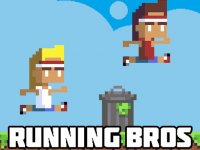
The clean, family-friendly presentation contains no violent content, and the rules are simple enough for children while still offering enough timing pressure for adults. Anyone looking for a screen-friendly activity that sharpens problem-solving and concentration without complex systems will find it accessible. [IMG_2]








Editorial Notes