Young Hero Platform Quest

Reviews
Young Hero Platform Quest keeps its focus narrow: run, jump, and reach the end of each level. That simplicity works in its favor for browser play, and the gradual difficulty ramp gives newcomers room to learn while still challenging experienced platformer fans. The retro presentation and changing environments add variety across sessions. The main limitation is that the available information does not detail specific level counts, characters, or reward types, so players wanting deep customization or story should temper expectations.
Description
Core Objective and Moment-to-Moment Play
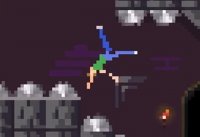
Each level in Young Hero Platform Quest has a single clear goal: move the young hero from the starting point to the endpoint. Reaching it means running, jumping, and navigating around obstacles that stand in the path. There are no complicated systems to learn first — the challenge comes from timing and positioning, the two skills that define the platformer genre. Early stages let you practice basic movement, and later stages ask for more precise inputs as obstacles and environmental conditions change.
Progression and Difficulty Curve
The game introduces new obstacle types and environmental shifts as you advance, so the pacing ramps up gradually rather than all at once. That structure keeps early levels approachable for newcomers while giving experienced players something to work toward. Because each attempt teaches you a little more about a level's layout, repeated tries are part of the design, not a punishment. You can pause at any time, which makes the game work for both short breaks and longer sessions.
Controls and Platform Availability
You play with keyboard or mouse inputs, and the controls are kept simple enough for fast browser sessions. The game runs on desktop and mobile browsers without installation, so the same save-free pick-up-and-play approach applies whether you are at a computer or on a phone. That accessibility is central to the experience: the barrier to starting a level is low, but the skill ceiling rises as levels get harder.
Retro Style and Replay Value
Retro-inspired visuals and sound give the game a classic feel, and the changing level themes help keep repeated sessions from feeling identical. A reward system tied to completing objectives and beating personal records gives you a reason to revisit stages. The mix of shifting obstacle patterns and different environments supports replay, especially for players who enjoy chasing better runs.








Editorial Notes