Gemstone Shape Puzzle

Reviews
Gemstone Shape Puzzle focuses on a single clear mechanic: filling outlined shapes with colorful cubes to create continuous rows. The 50-stage progression moves from simple grids to arrangements where one placement affects several rows, rewarding careful observation over speed. With no timers or penalties, it suits casual players and families who want a low-pressure brain teaser. The main limitation is that the input describes only one core puzzle type, so variety depends on how the later stages rearrange that same rule.
Description
Filling Geometric Outlines
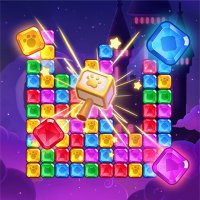
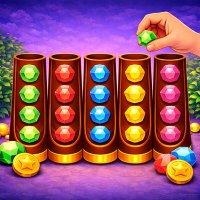
Gemstone Shape Puzzle asks you to complete outlined geometric forms by placing colorful cubes onto a grid. Each puzzle shows a shape divided into cells, with some cells already holding cubes that contain multiple colored zones. Your goal is to arrange the remaining cubes so that every row becomes continuous, with no gaps left in the shape. The gemstone-themed cube designs give each completed puzzle a visual finish that reinforces the sense of a solved pattern.
Drag-and-Drop Interaction
Below the playing field, a panel displays the cubes you need to place. Using a mouse or touch screen, you drag each cube onto a matching cell. The game checks your progress automatically and unlocks the next stage once a puzzle is completed correctly. Because the interface relies on simple drag-and-drop, the challenge comes from reading the grid rather than from complex controls. Responsive HTML5 technology means the same layout works on a PC, phone, or tablet.
Progression and Difficulty
Across 50 stages, the puzzles move from simple patterns to more complex arrangements. Early boards introduce the basic rule of continuous rows, while later shapes require you to track how a single cube affects multiple potential rows. Pre-placed cubes with multiple colored zones act as anchors, showing where certain colors must connect. The difficulty curve is steady rather than sudden, so each new stage builds on the spatial reasoning you practiced before.
Approaching a Puzzle
Start by studying the pre-placed cubes to understand the pattern they imply. Cells that belong to several possible rows deserve attention first, because a wrong placement there can block more than one line. There are no time limits or penalties, so you can rearrange your approach without pressure. If you get stuck, try placing cubes in a different order or look for symmetrical patterns in the outline. Regular practice helps improve pattern recognition and logical thinking.







Editorial Notes